


 English
 عربى
عربىNews
HOME / NEWS / Industry News / The Ultimate Guide to TPU Layflat Hoses: Selection, Applications, and Advantages

Content
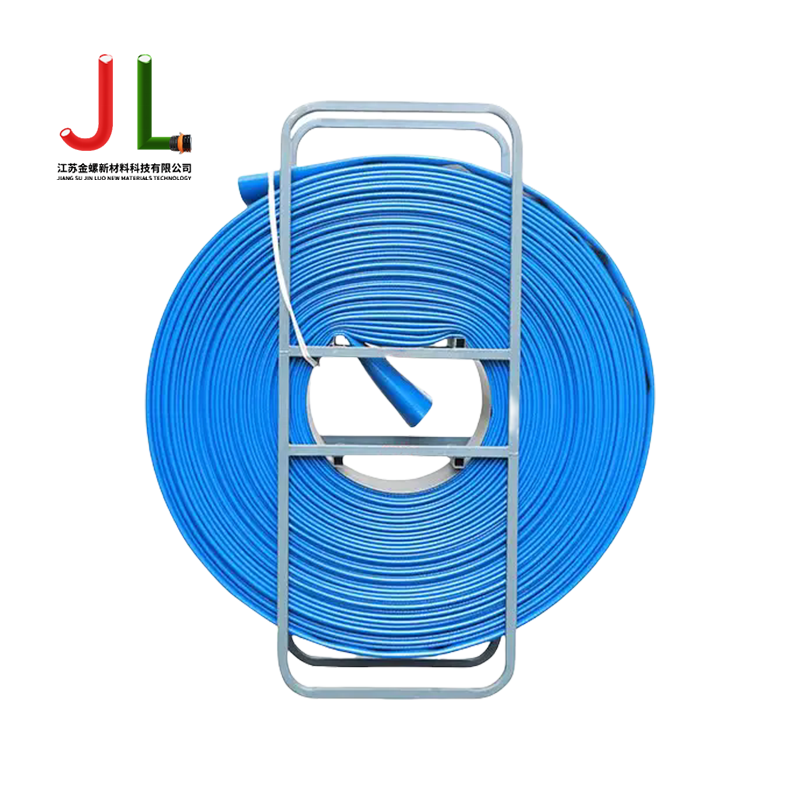
In the demanding world of fluid transfer across industries, the need for durable, flexible, and efficient hose solutions is paramount. Among the various materials available, Thermoplastic Polyurethane (TPU) has emerged as a frontrunner for manufacturing high-performance layflat hoses. A TPU layflat hose is a type of collapsible hose designed to lie flat when empty, saving tremendous space during storage and transport, yet capable of handling significant pressure and abrasive materials when deployed. Its core strength lies in the unique properties of TPU—a polymer that masterfully combines the elasticity of rubber with the toughness and abrasion resistance of plastics. This guide delves deep into the world of TPU layflat hoses, exploring their critical applications, key selection criteria, and undeniable advantages over traditional hose types. We will also integrate insights from Jiangsu Jinluo New Material Technology Co., Ltd., a manufacturer dedicated to advancing hose technology for sectors ranging from oil and gas to agriculture and emergency response. Their expertise in producing customized industrial TPU layflat hoses from 2 to 16 inches in caliber underscores the practical and technical aspects of these essential tools.
The adaptability of TPU layflat hoses stems from their robust construction. Typically featuring a TPU inner tube for fluid compatibility, a high-tensile textile reinforcement for pressure rating, and a TPU outer cover for protection, these hoses excel where others fail. Let's explore five critical, search-driven applications that highlight their utility.
The agricultural sector constantly seeks methods to improve yield and optimize resource use. TPU layflat hose for agricultural irrigation has become a cornerstone technology for modern farming. Unlike rigid PVC pipes or heavy rubber hoses, TPU layflat hoses are incredibly lightweight, allowing for quick deployment across fields. Their layflat nature means a 100-meter hose can be rolled into a compact, manageable coil, reducing labor and time for setup and retrieval. The TPU material is resistant to many fertilizers, pesticides, and sunlight (UV degradation), ensuring a longer service life in outdoor conditions. Farmers can use these hoses for surface irrigation, as transfer lines from water sources to central pivots, or for precise fertigation—the application of fertilizers through an irrigation system. The smooth inner bore minimizes friction loss, ensuring water pressure is maintained over long distances for uniform water distribution. For operations managed by entities like Jiangsu Jinluo New Material Technology Co., Ltd., customization in length and diameter allows for systems tailored to specific field layouts, maximizing coverage and minimizing waste.
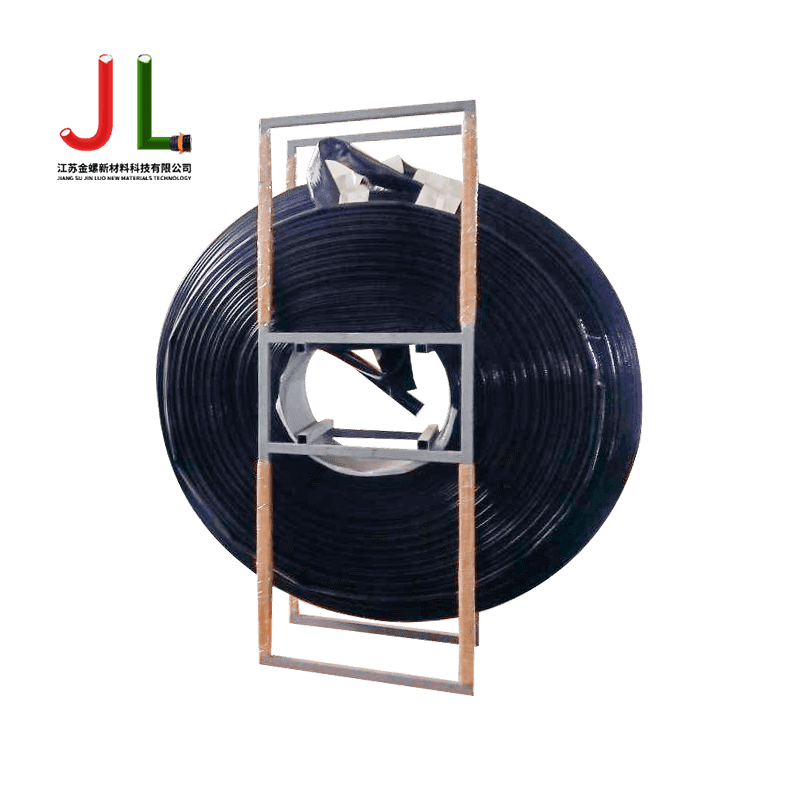
In the oil and gas industry, the transfer of fluids is often a temporary but critical operation, such as well testing, fracturing support, or emergency bypass pumping. This demands a hose that is not only chemically resistant but also rapidly deployable. The heavy duty TPU layflat hose for oil transfer is engineered for this very purpose. It is designed to handle crude oil, diesel, brine water, and other hydrocarbons while resisting the abrasive effects of sand and proppants often present in fracturing fluids. Its high-pressure rating, achieved through specialized reinforcement layers, ensures safe operation in high-flow scenarios. The key advantage over traditional steel braided hoses is portability and speed; kilometers of layflat hose can be transported on a single reel truck and unrolled much faster than assembling rigid pipework. Furthermore, its flexibility allows it to navigate around obstacles on rough terrain, a common challenge at exploration and production sites. Manufacturers focusing on this niche, such as Jiangsu Jinluo New Material Technology Co., Ltd., often subject these hoses to rigorous testing for static pressure, impulse fatigue, and chemical compatibility to guarantee reliability in such high-stakes environments.
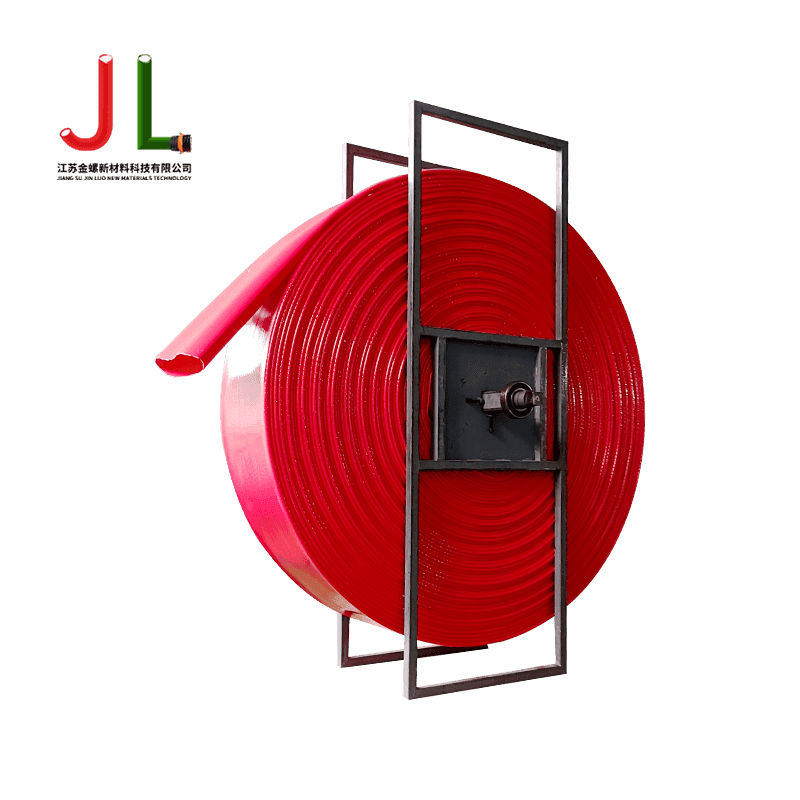
When fire strikes, establishing a rapid, high-volume water supply from a distant source like a lake, river, or static tank is crucial. Fire departments rely on specialized equipment for this task, and the firefighting water supply TPU layflat hose is a vital component of this system, often used in relay pumping operations. These hoses are characterized by their exceptional burst pressure ratings and lightweight design, allowing firefighters to deploy hundreds of feet of hose quickly by hand or with minimal equipment. The bright colors (often orange or yellow) and reflective strips enhance visibility in low-light, smoky conditions. The TPU coating offers excellent resistance to abrasion from being dragged over rough pavements, curbs, and debris, which is inevitable during emergency operations. Compared to older rubber jacketed hoses, TPU layflat hoses dry faster and are less prone to mildew, reducing maintenance downtime. Their ability to lie flat ensures they take up minimal space on fire trucks, freeing up room for other life-saving equipment. This application underscores the hose's role in public safety infrastructure.
Providing clean drinking water in temporary situations—such as disaster relief camps, outdoor festivals, military field operations, or construction sites—requires hoses that will not contaminate the water. A drinking water safe TPU layflat hose is certified to meet strict sanitary standards. The TPU used is typically a specific, food-grade formulation that is odorless, tasteless, and does not leach harmful plasticizers or chemicals into the water. This sets it apart from general-purpose hoses which may impart a plastic taste or contain substances like phthalates. These hoses are also easy to clean and disinfect, preventing biofilm growth. Their lightweight and compact storage are again major benefits, allowing humanitarian organizations or event planners to transport large volumes of hose necessary to set up extensive temporary water networks. The flexibility of the hose makes it easy to route around tents and structures without kinking, which could restrict flow. For manufacturers, producing hoses for this application involves adhering to certifications like NSF/ANSI 61 or equivalent, ensuring the product is fit for human consumption contact.
The rehabilitation of aging underground pipelines without the need for disruptive and expensive excavation is a growing field. One innovative method involves the use of TPU layflat hose for trenchless pipeline rehabilitation. In processes like cured-in-place pipe (CIPP) or specific grouting techniques, a resin-impregnated felt tube is inserted into the damaged host pipe. A TPU layflat hose is then used as a calibration liner. It is inserted inside the felt tube and inflated with water or air under high pressure. This forces the resin-saturated felt against the inner walls of the old pipe, where it cures to form a new, structural pipe-within-a-pipe. The TPU hose's role is critical: it must withstand very high internal pressures uniformly to ensure a smooth, well-formed new pipe. Its flexibility allows it to be easily winched into place through long and curved pipelines. After curing, it is depressurized, collapses, and can be simply pulled out, ready for reuse on the next project. This reusability and durability make it a cost-effective tool for contractors specializing in this green technology, reducing environmental impact and social disruption compared to traditional "dig-and-replace" methods.
Choosing the correct TPU layflat hose is not a one-size-fits-all decision. It requires a careful evaluation of the application's specific demands against the hose's technical specifications. Making the wrong choice can lead to premature failure, safety hazards, and increased operational costs. The following sections break down the key selection criteria.
The performance of a layflat hose is dictated by its composite structure. Understanding each layer's function is the first step in selection.
For example, a hose designed for trenchless pipeline rehabilitation will prioritize an extremely high burst pressure, demanding a premium reinforcement layer, while a hose for agricultural irrigation might prioritize UV resistance and flexibility in its outer cover.
Ignoring the technical specifications on a hose's datasheet is a recipe for failure. Three of the most critical specs are Working Pressure, Internal Diameter, and Temperature Range.
To illustrate the differences, let's compare hypothetical hoses suited for two different applications mentioned earlier. The following table uses sentence-style comparisons followed by a tabular summary.
A hose designed as a heavy duty TPU layflat hose for oil transfer typically operates at much higher pressures than one used for general water transfer in agriculture. The oil transfer hose might have a working pressure of 18 bar (260 PSI) or more to handle the demands of pump equipment, while an agricultural irrigation hose might be rated for 8-10 bar (115-145 PSI). The diameter requirement also differs; oil transfer often uses larger diameters (e.g., 4" to 12") for high-volume flow, whereas agricultural drip-line feeds might use smaller diameters (2" to 4"). Temperature resistance is crucial for oil hoses as transferred fluids can be warm, requiring a TPU compound stable up to 80°C (176°F), whereas ambient water transfer has a lower requirement.
| Specification | Heavy Duty Oil Transfer Hose | Agricultural Irrigation Hose |
|---|---|---|
| Primary Application | Transfer of crude oil, brine, fracturing fluids | Water and fertilizer distribution in fields |
| Typical Working Pressure | High (e.g., 16-24 bar / 230-350 PSI) | Medium (e.g., 8-12 bar / 115-175 PSI) |
| Common Internal Diameter | Larger (4 inches to 16 inches) | Versatile (2 inches to 6 inches) |
| Critical Material Property | Hydrocarbon resistance, high abrasion resistance | UV resistance, flexibility, fertilizer resistance |
| Temperature Range Focus | Stability at elevated fluid temperatures | Performance under prolonged sun exposure |
Long-term cost-effectiveness is tied to a hose's durability. Three forms of resistance are paramount:
A drinking water safe TPU layflat hose prioritizes chemical inertness (to preserve water quality) and may have slightly different additive packages compared to an industrial hose where maximum abrasion resistance is the top priority.
To fully appreciate the value proposition of TPU layflat hoses, a direct comparison with traditional materials like PVC (Polyvinyl Chloride) layflat hoses and rubber hoses is necessary. Each material has its place, but TPU often represents a superior balance of properties for demanding applications.
PVC hoses are a common and cost-effective option for light-duty water transfer. However, for industrial and heavy-duty use, TPU outperforms PVC in almost every metric except initial purchase price.
TPU layflat hoses are significantly more flexible at low temperatures than PVC hoses, which become stiff and prone to cracking. The abrasion resistance of TPU is vastly superior; a PVC hose can be easily gouged if dragged over rough terrain, compromising its integrity, while a TPU hose can withstand such punishment. In terms of pressure rating, reinforced TPU hoses can handle much higher working pressures than their PVC counterparts. Furthermore, TPU has better resistance to oils, greases, and a broader range of chemicals. PVC can also become brittle with prolonged UV exposure unless specifically stabilized, whereas UV-stabilized TPU formulations offer longer outdoor service life. For a critical application like firefighting water supply, where reliability, durability, and flexibility in all conditions are paramount, TPU is the unequivocal material of choice over PVC.
Traditional rubber hoses, often with fabric or wire reinforcement, are known for their toughness. The comparison here is closer, but the layflat design of TPU hoses introduces decisive logistical advantages.
While heavy-duty rubber hoses can match or exceed the pressure and chemical resistance of TPU hoses, they are extraordinarily heavy and bulky. Storing and transporting 100 meters of large-diameter rubber hose requires significant space and effort. In contrast, the same length of TPU layflat hose, when emptied and rolled, occupies a fraction of the space and is much lighter, reducing shipping costs and enabling faster deployment by smaller crews. Rubber hoses are also prone to internal and external mildew if not dried thoroughly, a non-issue with the non-porous TPU. For operations like temporary fuel transfer or trenchless pipeline rehabilitation, where portability, speed of setup, and ease of handling directly impact project timelines and costs, the TPU layflat hose offers a modern, efficient alternative to traditional rubber hose technology. The balance of performance, weight, and storage efficiency makes TPU a compelling upgrade.
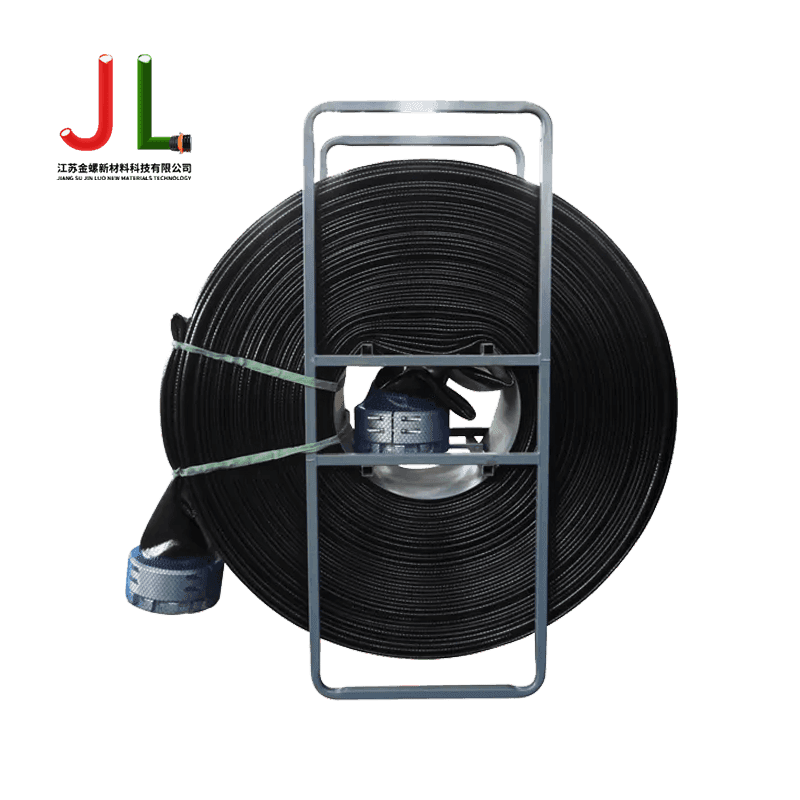
The evolution of hose technology is driven by specific industry challenges. Forward-thinking manufacturers like Jiangsu Jinluo New Material Technology Co., Ltd. are at the forefront, moving beyond standard offerings to provide engineered solutions. Customization is a key service, addressing the fact that no two projects are identical. A mining operation might need a hose with exceptional abrasion resistance for slurry transfer, while a municipal water authority might need a drinking water safe TPU layflat hose in a specific diameter and length to connect to temporary treatment facilities. The ability to customize caliber (from 2 inches to 16 inches and beyond), length, reinforcement type (for pressure), TPU compound (for chemical compatibility), and outer cover color or thickness allows engineers to specify a hose that is optimized for its exact duty. This approach minimizes compromises, enhances safety, and improves the total cost of ownership by delivering a product that lasts longer in its intended environment. Whether it's for the high-pressure demands of the energy sector or the sanitary requirements of water delivery, this focus on tailored innovation ensures that TPU layflat hose technology continues to meet the ever-changing needs of industry and emergency services worldwide.

Request for a call today