


 English
 عربى
عربىNews
HOME / NEWS / Industry News / TPU Hose vs Rubber Hose: Abrasion Resistance, Applications & Selection Guide

Content
For contractors, mine operators, and agricultural engineers sourcing fluid-conveyance solutions for punishing field conditions, the choice between TPU (thermoplastic polyurethane) hose and traditional rubber hose — typically NBR (nitrile butadiene rubber) — has a clear answer in most heavy-duty scenarios: TPU outperforms rubber on nearly every mechanical durability metric while offering a significant weight advantage.
That said, rubber hose retains genuine advantages in specific thermal and chemical contexts. The sections below break down where each material excels, with the performance data procurement teams need to make a defensible specification decision.
The fundamental difference between TPU and NBR rubber lies in molecular structure. NBR is a thermoset elastomer — vulcanized at high temperature into a cross-linked network that resists petroleum-based fluids. TPU is a thermoplastic elastomer with long-chain urethane segments that deliver exceptional mechanical strength without sacrificing flexibility.
| Property | TPU Hose | NBR Rubber Hose |
|---|---|---|
| Abrasion Resistance (Taber, mg/1000 cycles) | 2–5 mg loss | 20–50 mg loss |
| Tensile Strength | 40–55 MPa | 10–20 MPa |
| Weight (relative, same bore/wall) | ~30–40% lighter | Baseline |
| Operating Temperature Range | −40 °C to +80 °C | −30 °C to +120 °C |
| Oil / Fuel Resistance | Good (ether-based TPU) | Excellent |
| Flexibility at Low Temperature | Retains flexibility at −40 °C | Stiffens below −20 °C |
| Typical Service Life (abrasive slurry) | 3–6× longer than rubber | Baseline |
| Recyclability | Recyclable (thermoplastic) | Not recyclable (thermoset) |
The abrasion resistance gap is the decisive factor in most industrial drag-hose and slurry applications. TPU's Taber abrasion loss can be 10 to 25 times lower than standard NBR rubber, directly translating to longer replacement intervals and lower total cost of ownership.
Abrasion resistance in a hose wall is not simply about hardness — it requires a material that combines hardness with elasticity. A purely hard surface (like HDPE) resists scratching but fractures under impact. Rubber absorbs impact but erodes quickly under continuous particle abrasion. TPU bridges this gap through its unique microphase-separated structure: rigid urethane hard segments provide scratch resistance, while flexible soft segments absorb kinetic energy and prevent crack propagation.
In DIN 53516 abrasion testing — the standard most hose manufacturers reference — TPU compounds typically achieve volume losses of 20–60 mm³, compared to 150–300 mm³ for standard NBR. In applications where the inner bore contacts silica sand, gravel, slurry solids, or abrasive grains at high velocity, this difference is the single largest determinant of hose service life.
Hardness selection matters: most abrasion-duty TPU hoses are specified in the Shore A 85–95 range, which balances wear resistance with sufficient flexibility to coil, drag, and deploy without kinking.
In field operations — whether a mine site, construction zone, or irrigated farm — hose handling efficiency is as operationally significant as material durability. A 100-meter run of 4-inch (100 mm) NBR rubber hose can weigh upward of 120–160 kg. The equivalent TPU hose run weighs 70–100 kg, a difference that directly affects how quickly crews can lay, move, and re-rout lines.
On rough terrain, the hose must also flex and recover repeatedly as equipment moves across uneven ground. NBR rubber at low temperatures becomes noticeably stiffer, increasing the risk of kinking at connection points. TPU maintains its elastic modulus down to −40 °C, making it the reliable choice for early-morning deployments in cold climates and high-altitude mining operations.
Kink resistance is another practical advantage: the higher tensile strength of TPU allows thinner wall constructions that are paradoxically more kink-resistant than thicker rubber walls under bending loads.
Underground and surface mining subject hoses to the harshest combination of stressors in any industrial sector: continuous contact with rock-laden slurry, mechanical dragging over sharp surfaces, exposure to diesel fuel, hydraulic oils, and UV radiation in open-cut operations, plus the risk of impact from falling rock or equipment.
TPU hose addresses each of these simultaneously. In tailings transport and dewatering circuits, where slurry solids content can reach 30–60% by weight and particle sizes include coarse sand and gravel, TPU inner bores show dramatically lower erosion rates than rubber. Field reports from coal and copper mining operations consistently document replacement cycles 3 to 5 times longer for TPU drag hoses compared to rubber equivalents of the same wall thickness.
For hydraulic hose applications in mining machinery — drill rigs, longwall equipment, roof bolters — ether-based TPU formulations provide the oil resistance needed alongside the flexibility to survive constant equipment motion.
Center-pivot irrigation, slurry spreading, and liquid fertilizer transfer share one common challenge: hoses are dragged hundreds of meters across fields containing crop stubble, stones, and compacted soil at every seasonal cycle. Traditional rubber drag hoses fail primarily through outer-wall abrasion and UV degradation — two modes where TPU holds a decisive advantage.
In slurry spreading — one of the most abrasive agricultural applications — TPU layflat drag hoses in 3- to 6-inch diameters have demonstrated service lives of four to six seasons versus one to two seasons for rubber in comparable field conditions. The UV and ozone stability of TPU also eliminates the surface cracking and hardening common in rubber hoses after extended outdoor storage.
Weight savings are particularly valuable in agriculture: a tractor pulling a 300-meter slurry drag hose system benefits immediately from the reduced inertia of lighter TPU lines, especially at field headlands where the hose changes direction.
Chemical resistance must be verified for specific formulations. Standard ether-based TPU handles most agricultural chemicals including dilute acids and alkalis; ester-based TPU is preferred where hydrolysis resistance in continuously wet conditions is required.
Construction sites combine the abrasive conditions of mining with the frequent relocation demands of agriculture. Concrete pumping lines, dewatering hoses, pneumatic shotcrete delivery, and compressed-air supply all impose different but overlapping stresses on hose materials.
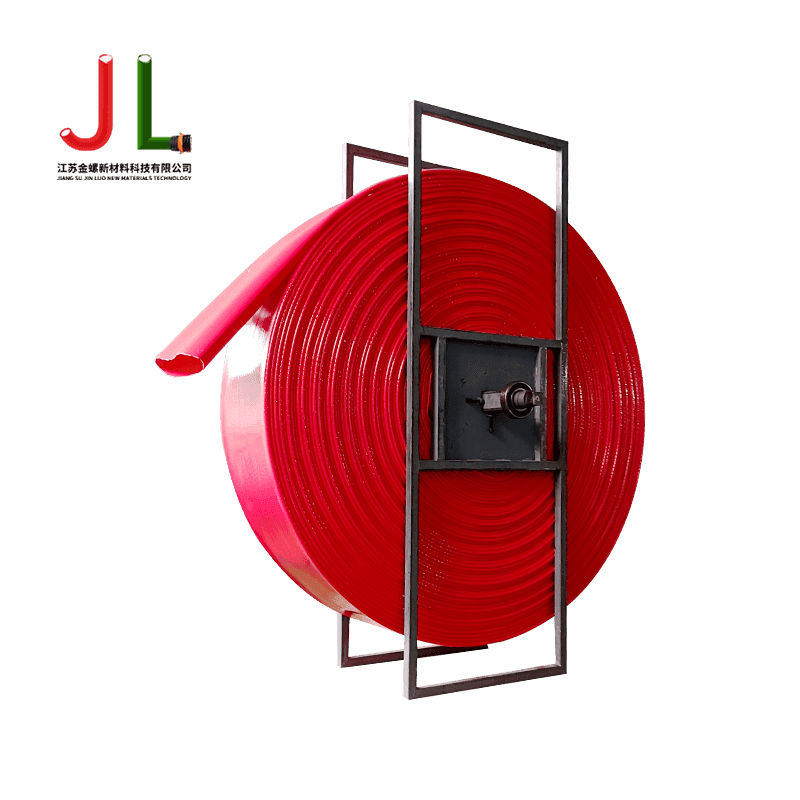
In concrete and shotcrete delivery, TPU-lined hoses withstand the aggregate-laden flow that rapidly erodes standard rubber bores. For dewatering on urban construction sites, where pumps must move water mixed with cement fines, fine gravel, and silt, TPU layflat hoses provide longer service and are significantly easier to store and transport than heavy rubber alternatives.
Compressed-air hoses on construction sites face a different set of demands: high working pressures (typically 8–16 bar), repeated coiling, and exposure to cutting oils, hydraulic fluid mist, and diesel exhaust. Reinforced TPU air hoses — with polyester braid or spiral steel embedded in the wall — meet these pressures while staying lighter and more flexible than rubber alternatives throughout the working day.
Slurry transport is arguably the most material-demanding hose application. The combination of high solids concentration, large particle size, high flow velocity, and continuous operation eliminates most hose materials quickly. The key selection variables for a slurry transport hose are:
For the majority of mineral processing, dredging, and construction dewatering applications operating below 70 °C with abrasive solids, TPU is the preferred inner-bore material. In high-temperature chemical slurry applications, rubber compounds — EPDM or neoprene — retain their niche.
A heavy-duty industrial drag hose designed for mining or agricultural slurry service typically comprises four functional layers:
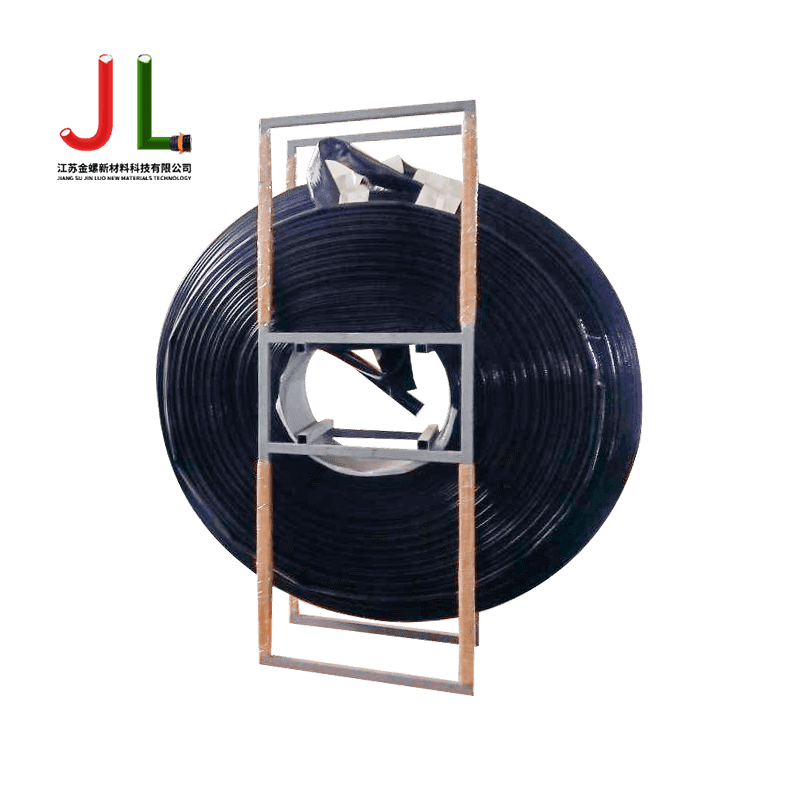
For layflat drag hoses used in slurry spreading and irrigation, the construction is simpler: a TPU inner layer bonded to a woven polyester fabric, which collapses flat when empty for compact storage and rolling. Working pressures of 6–16 bar are standard for agricultural drag hoses; mining suction/discharge hoses typically run at 10–25 bar with vacuum ratings to −0.9 bar.
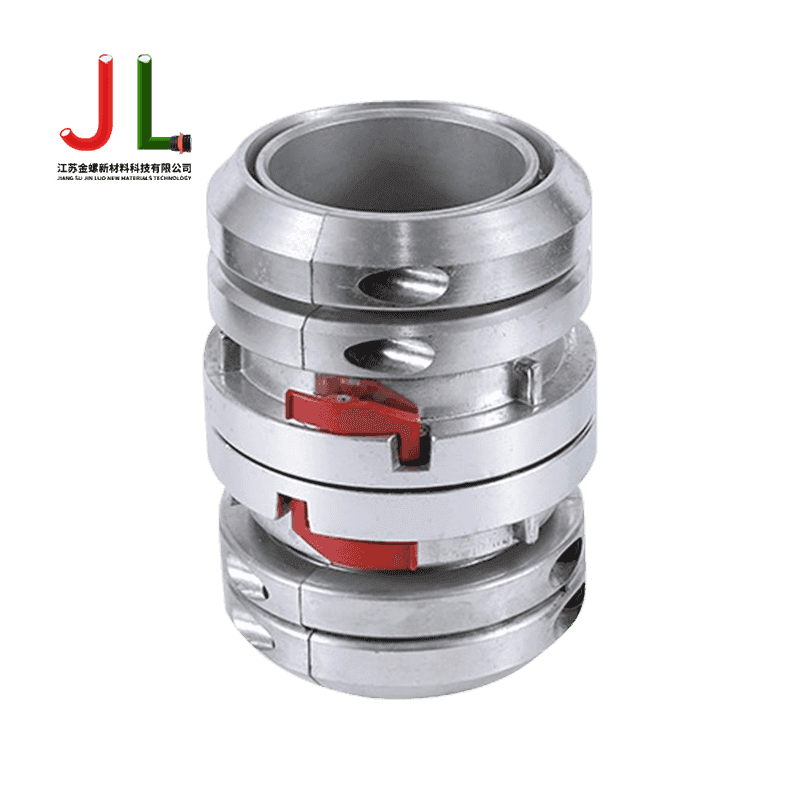
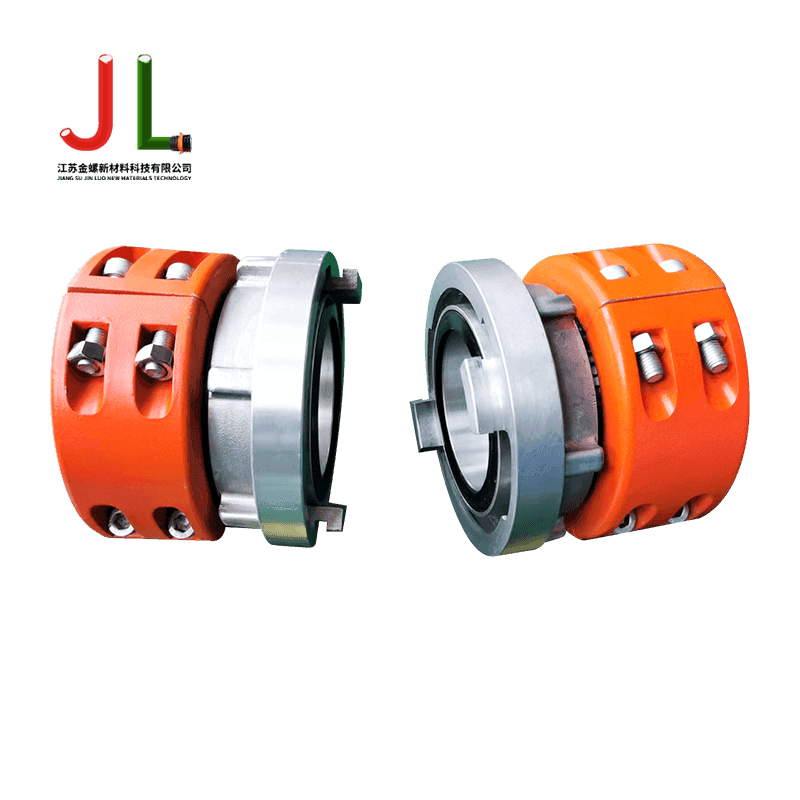
Coupling selection is equally important. For TPU drag hoses, crimped or swaged couplings in ductile iron, aluminum, or stainless steel ensure secure termination without cold-flow creep at the fitting interface. Cam-and-groove (Camlock) fittings are the field standard for fast disconnection in drag-line systems.
When specifying a replacement hose for an existing system, measure the inside diameter (ID) — not the outside — and verify the manufacturer's certified working pressure at the operating temperature of your application. A hose rated at 16 bar at 23 °C may derate to 10 bar at 60 °C; published derating curves must be consulted for elevated-temperature slurry systems.

Request for a call today