


 English
 عربى
عربى
Gas Layflat Hoses: Construction, Pressure Ratings & Applications
Content
What Gas Layflat Hoses Are and Where They Are Used
Gas layflat hoses are flexible, collapsible conduits designed to convey gaseous media — including LPG, natural gas, compressed air, and industrial process gases — under controlled pressure. Unlike rigid pipework, they collapse flat when empty, enabling compact storage, rapid deployment, and straightforward field replacement. Their flat-profile storage is the defining practical advantage: a 100-metre coil of layflat hose occupies a fraction of the space required by an equivalent round-bore hose assembly, making them a preferred choice wherever portability and deployment speed matter.
Primary application areas include temporary gas supply lines on construction and mining sites, emergency bridging connections during pipeline maintenance, agricultural gas distribution (notably LPG for crop drying and heating), portable power generation setups, and event or festival gas reticulation systems. In each case, the hose must maintain gas-tight integrity across varying pressures, temperatures, and handling conditions — requirements that drive the specification decisions outlined below.
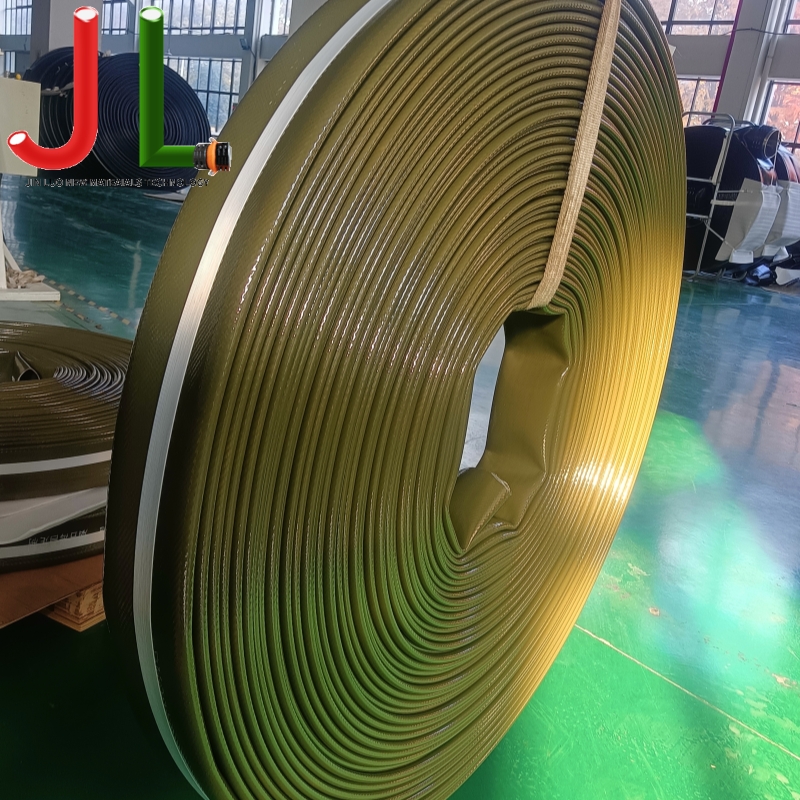
Construction: How a Gas Layflat Hose Is Built
Gas layflat hoses are composite structures, and each layer serves a distinct function. Understanding the construction helps buyers evaluate whether a given product is genuinely suited to gas service or is a repurposed water discharge hose — a distinction that carries real safety consequences.
Inner Tube
The inner liner is the gas-contact surface and must be chemically compatible with the specific gas being conveyed. Thermoplastic polyurethane(TPU) is the standard choice for LPG and hydrocarbon gas service due to its low permeability to non-polar gases and resistance to hydrocarbon swelling. EPDM liners are used for natural gas and compressed air where ozone resistance is also required. Neoprene (CR) offers a middle ground for mixed-service applications. Permeation rate — the volume of gas that diffuses through the liner wall per unit area per unit time — is a key specification parameter and should be confirmed against the relevant gas standard, not assumed from general rubber compound data.
Reinforcement
One or more plies of high-tenacity polyester or nylon woven fabric provide the hose's pressure-bearing capacity and give the layflat its characteristic flat cross-section when empty. The weave angle and fabric weight determine both the working pressure ceiling and the hose's tendency to flatten smoothly without kinking. Anti-static yarn is woven into the reinforcement layer on hoses intended for flammable gas service, dissipating electrostatic charge that could accumulate from gas flow and create an ignition source — a requirement mandated under most gas hose standards globally.
Outer Cover
The external sheath protects reinforcement from UV degradation, ozone attack, abrasion against ground surfaces, and mechanical damage. For outdoor gas service, UV-stabilised covers are essential — unprotected rubber degrades rapidly under sustained sun exposure, leading to surface cracking that can propagate inward toward the reinforcement. So our outer layer uses TPU. Covers are typically coloured to indicate service type: yellow is the internationally recognised colour coding for gas hoses in most markets, though local standards vary and should always be confirmed.
Pressure Ratings and Working Temperature Ranges
| Gas Type | Typical WP (bar) | Temperature Range | Liner Material |
|---|---|---|---|
| LPG (propane/butane) | 6–20 | −20 °C to +60 °C | NBR |
| Natural gas (methane) | 4–10 | −30 °C to +70 °C | EPDM or NBR |
| Compressed air | 10–25 | −20 °C to +80 °C | EPDM or NR |
| Industrial process gas | 6–16 | −20 °C to +60 °C | Application-specific |
A minimum safety factor of 4:1 burst-to-working-pressure is the baseline requirement across most gas hose standards. For flammable gas service, some standards require a 5:1 ratio. Buyers should request full burst test documentation — not just the rated working pressure — when evaluating suppliers, since burst pressure is the primary evidence of actual construction quality.
Applicable Standards and Certification Requirements
Gas layflat hoses are subject to significantly more rigorous certification requirements than equivalent water hoses. The gas medium introduces permeation, flammability, and electrostatic ignition risks that require formal third-party validation, not just manufacturer specification claims.
- EN 1762 (Europe): The primary European standard for rubber hoses and hose assemblies for LPG in the vapour and liquid phase. Specifies permeation rates, electrical resistance, burst pressure, impulse cycling, and low-temperature flexibility requirements. CE marking under the Pressure Equipment Directive (PED 2014/68/EU) is required for hoses used in gas systems above certain pressure thresholds.
- ISO 2928: Covers rubber hoses for LPG in liquid and gaseous phases, providing internationally recognised test methodology that underpins many national standards outside Europe.
- AS/NZS 1869 (Australia/New Zealand): Mandates specific electrical conductivity requirements, permeation limits, and mechanical performance criteria for LPG hose assemblies used in the region. Anti-static properties are tested at both the hose body and coupling interface.
- ATEX / IECEx: Where gas layflat hoses are deployed in classified hazardous areas — including many petrochemical, mining, and offshore environments — ATEX (EU) or IECEx (international) compliance for the complete hose assembly including end fittings is mandatory to prevent electrostatic ignition.
Always request the actual test certificate number and issuing body, not a copy of the standard document. Certificates should identify the specific hose construction tested, not a generic product family, and should be within the certification's validity period.
End Fittings and Coupling Compatibility
The coupling interface is the most frequent origin of gas leaks in layflat hose systems. A certified hose body paired with a non-compliant or incorrectly assembled fitting provides no meaningful safety assurance. Key considerations for fitting selection:
- Material compatibility: Brass is the standard fitting material for LPG and natural gas service. Aluminium alloy fittings are used where weight is a priority but must be confirmed free from copper content above 70%, which risks acetylide formation with acetylene-containing gases. Stainless steel fittings suit corrosive environments.
- Crimped vs. clamp-type assembly: Factory-crimped (swaged) fittings maintain uniform radial grip and consistent gas seal geometry. Field-assembled clamp fittings introduce variability — over-tightening distorts the hose end; under-tightening allows micro-leakage. For pressurised gas service, crimped assemblies are the professional standard.
- Electrical continuity across the coupling: Anti-static hoses require electrical bonding to be maintained through the fitting to the connected equipment. Confirm that the coupling design provides metal-to-metal contact or that a separate earth bonding strap is specified where required by the applicable standard.
- Thread standard and pressure rating: BSP, NPT, and metric thread forms are all in common use. Mixing thread standards is a documented cause of fitting cross-threading and subsequent leaks. Confirm the thread form used on connected equipment before specifying hose end fittings.
Installation, Inspection, and Service Life Management
Gas layflat hoses require more disciplined inspection and replacement protocols than equivalent water hoses. The consequences of undetected degradation are considerably more serious, and rubber compound deterioration is not always visible on the outer surface before internal permeation increases to hazardous levels.
- Observe mandatory replacement intervals. Most gas hose standards and gas authority regulations specify maximum service life regardless of apparent condition — commonly 5 years from date of manufacture for LPG hoses, with the manufacture date marked on the hose body. Operating beyond the stated service life voids certification and insurance coverage in most jurisdictions.
- Conduct pre-use leak testing. After connection and before gas flow, pressurise the assembly to working pressure and check all joints with approved leak detection solution. Do not use naked flame or generic soapy water as a substitute for calibrated detection fluid.
- Protect from UV and ozone exposure during storage. Store hoses coiled in a dark, dry location away from electric motors or transformers, which generate ozone. UV and ozone attack accelerates cover cracking even in hoses that have never been pressurised.
- Never route over sharp edges or through pinch points. Layflat hoses are more susceptible to localised cover damage than round-bore hoses when dragged over kerbs, edges, or under vehicle tyres. Damage to the cover does not immediately compromise gas tightness but accelerates reinforcement degradation and reduces burst pressure margin.
- Retire immediately on any visible damage. Blistering, delamination, permanent kinking, or surface cracking are grounds for immediate removal from service. Do not attempt field repair of gas hoses; replacement is the only compliant response to physical damage.
Related Products
-

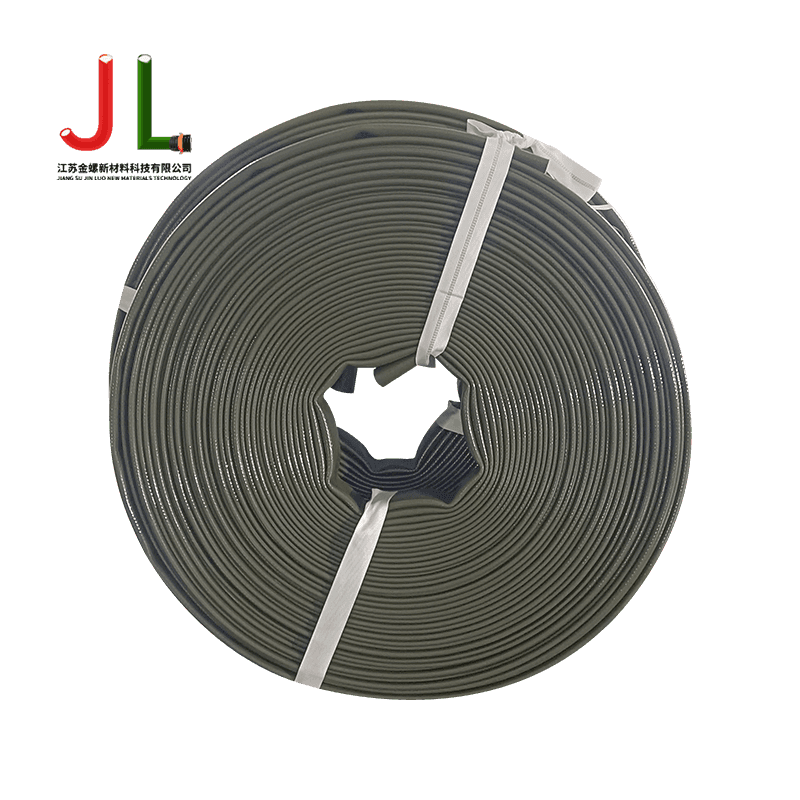
Jinluo Hose TPU Fracking Layflat Hose – Flexible Polyurethane Fracturing Water Supply Hose for Oilfield Applications
-
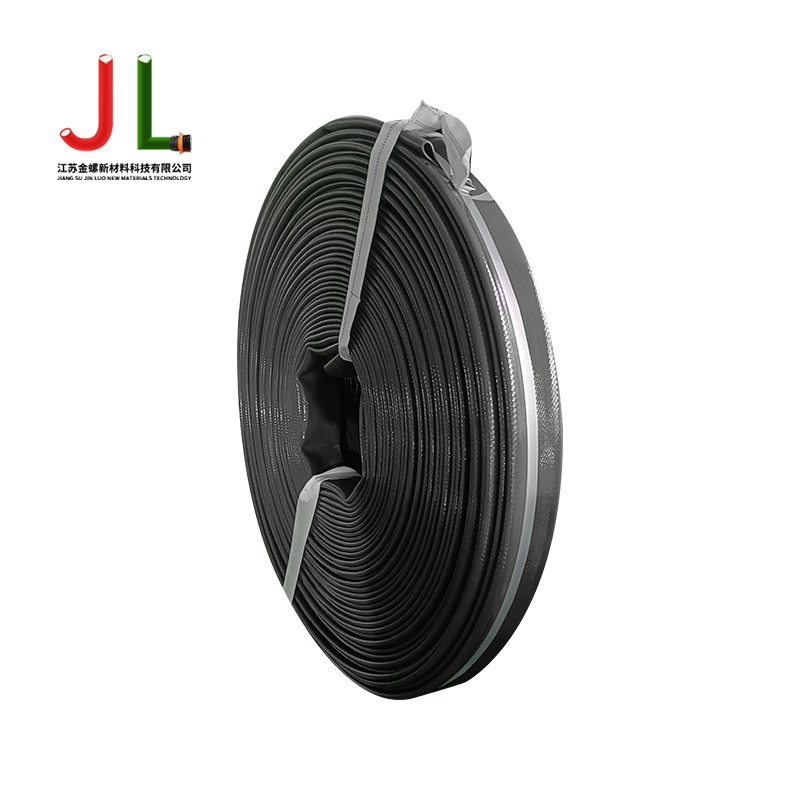
Jinluo Hose Polyurethane Fracturing Water Supply Hose
-
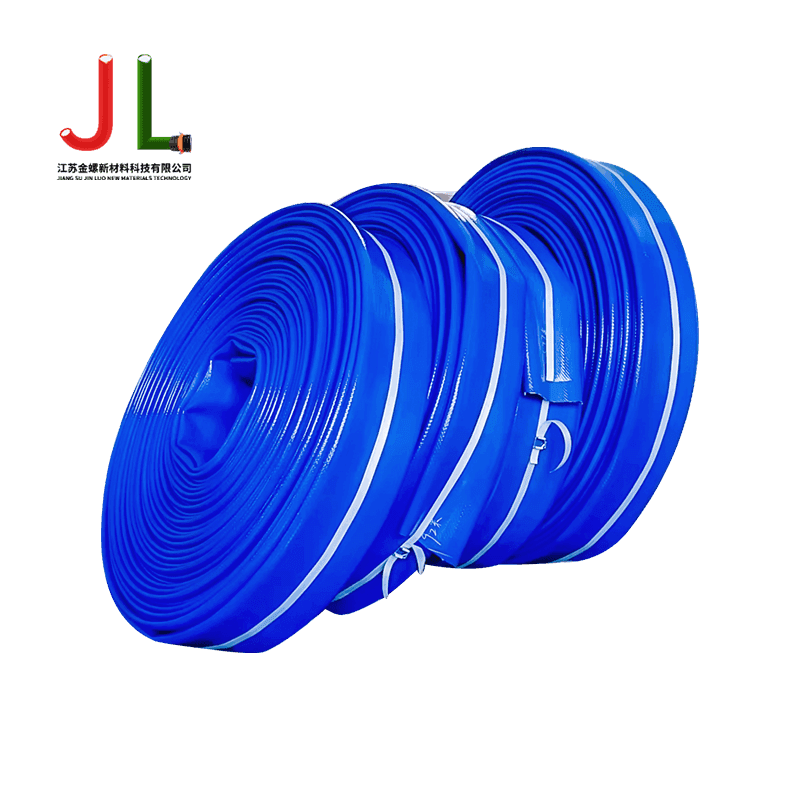
Jinluo Hose Polyurethane Slurry Hose – Reinforced Underground Mining Hose for Efficient Water and Slurry Discharge
-
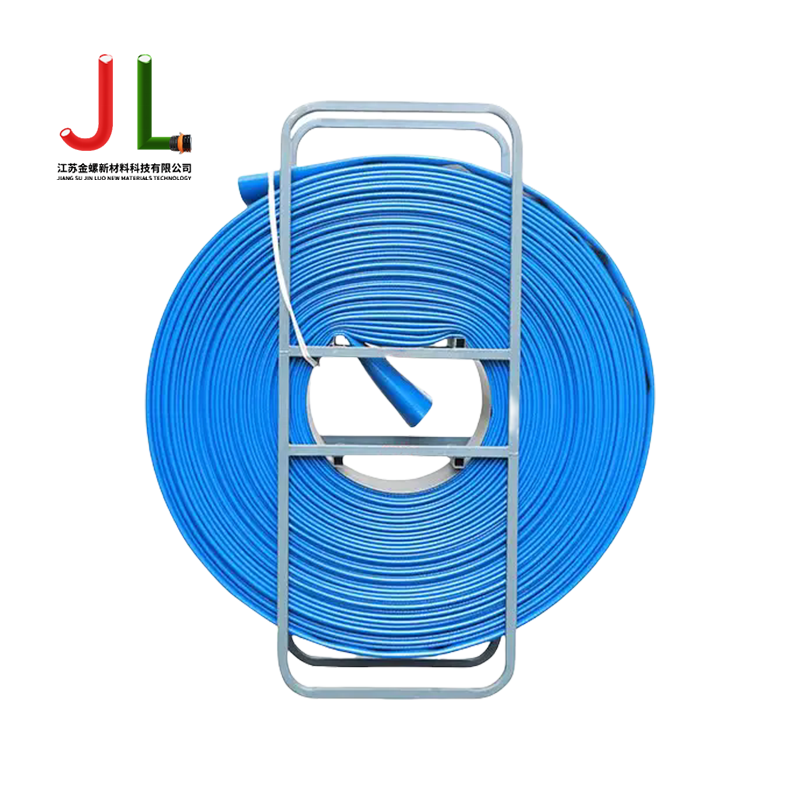
Jinluo Hose TPU frac water hose
-
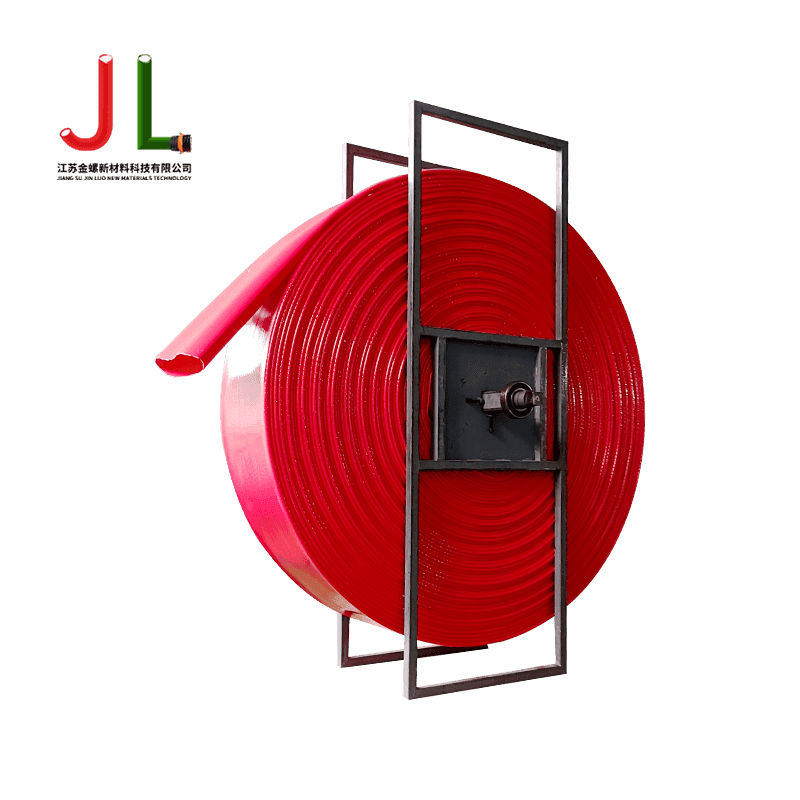
TPU Concrete Pouring Hose (Concrete Pumping Hose / Concrete Delivery Hose)
-
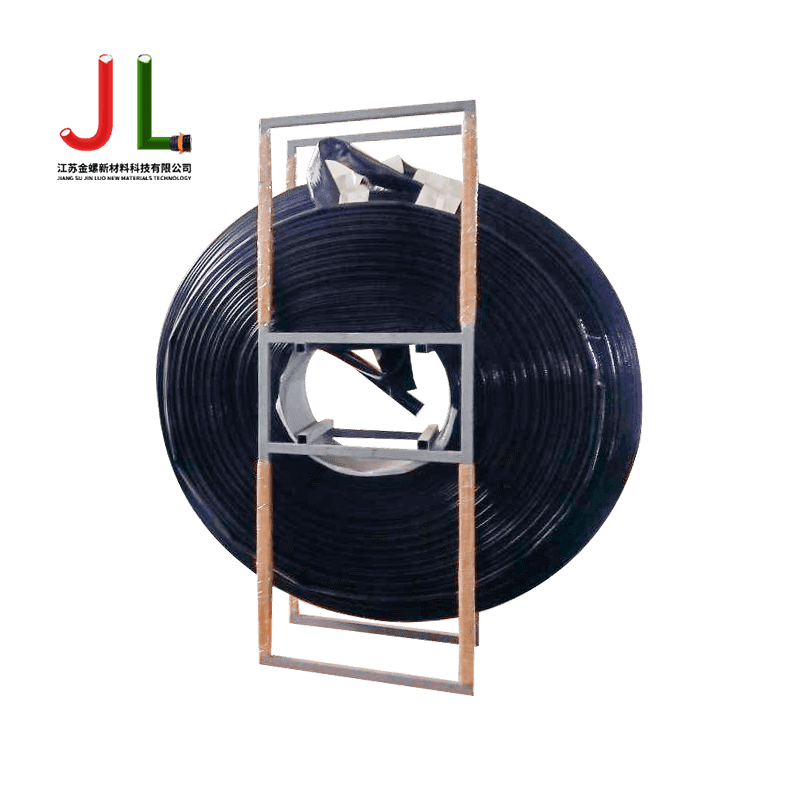
Jinluo Dual-Sided Polyurethane Trenchless Pipe Liner – Advanced Polyurethane Lining Hose for Trenchless Pipe Repair
-
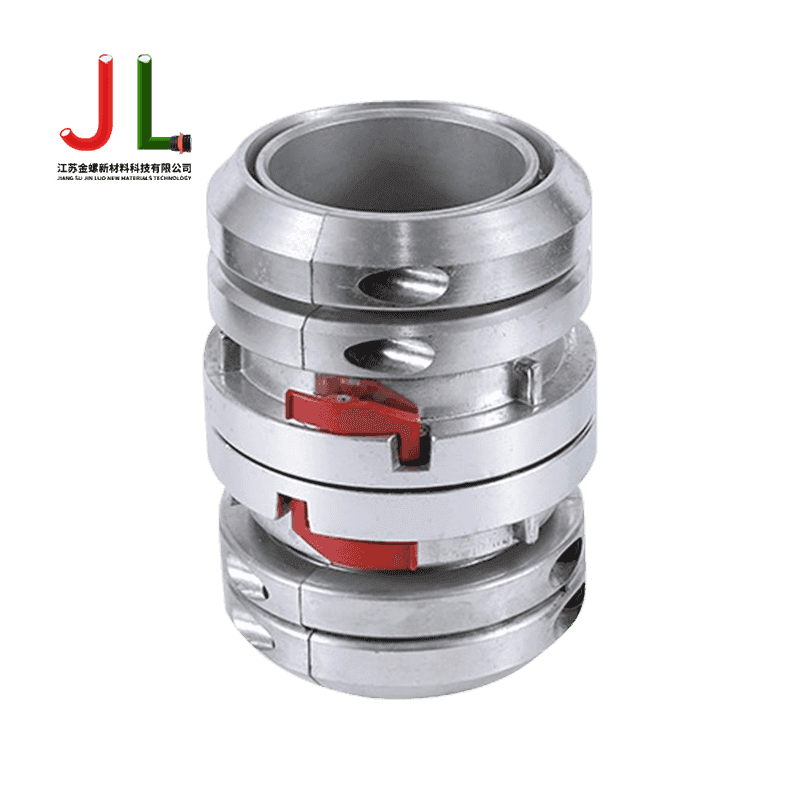
316 Stainless Steel Multi-Lug Quick Connect Couplings – Robust Stainless Steel Couplings for Quick Connections
-
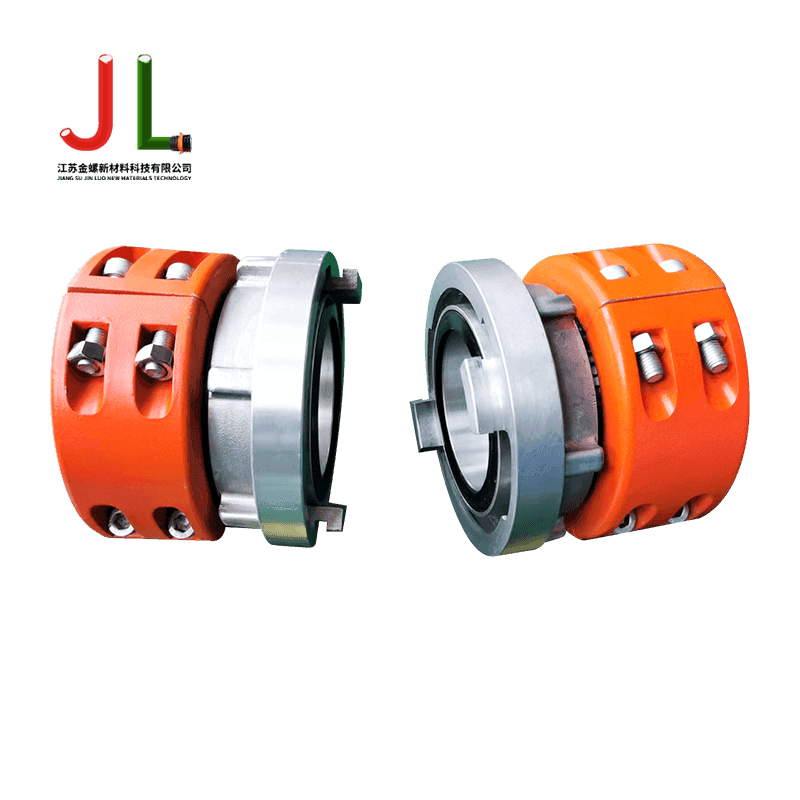
LDHC S Large Diameter Hose Coupling (Storz Type) – High-Performance Storz Type Coupling for Large Diameter Hose Connections
-
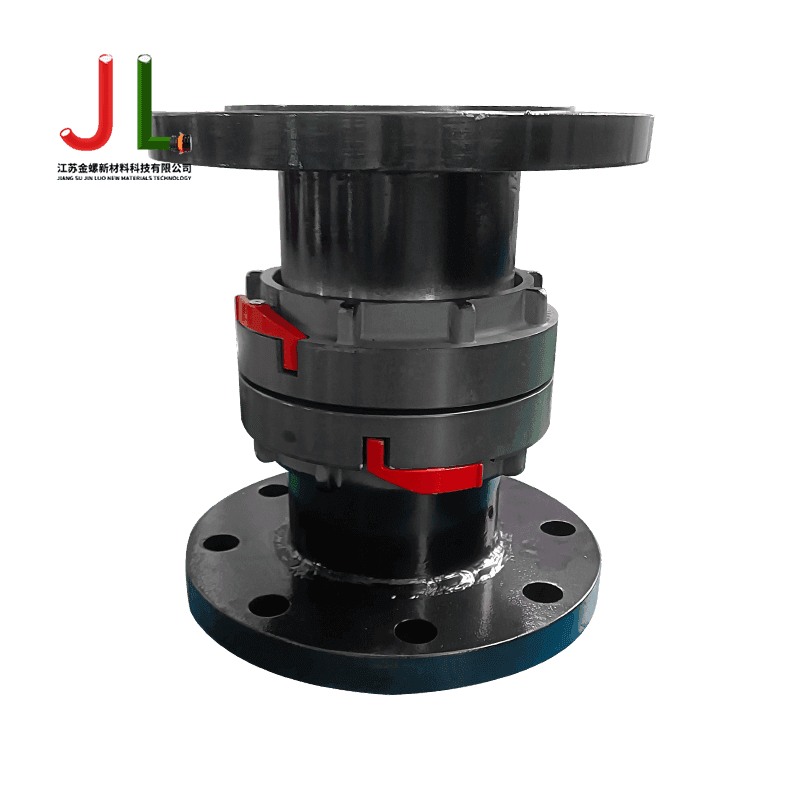
LDHC Large Diameter Hose Flange Coupling | High Pressure Sealing Carbon Steel / Stainless Steel Flange Connector for Petrochemical
Looking For Bussiness Opportunity?
Request for a call today

- Tel: +86-13801432164
- E-mail: [email protected]
- Address: No. 2 Workshop, East Zone, Photovoltaic Technology Industrial Park, No. 109 Yaojia Road, Jiulong Town, Hailing District, Taizhou City, Jiangsu Province, China
Quick Link
Products
Coprright 2025
Jiangsu Jinluo New Material Technology Co., Ltd.
Privacy
