


 English
 عربى
عربىNews
HOME / NEWS / Industry News / What Is a TPU Concrete Placement Hose and Why Does It Matter on Job Sites?

Concrete pumping operations depend on one component that rarely gets enough attention: the delivery hose. A poorly specified hose leads to premature wear, pressure failures, and unplanned downtime — all of which translate directly into project cost overruns. The TPU Concrete Placement Hose has emerged as a technically superior alternative to conventional rubber hoses, offering a measurable combination of abrasion resistance, lightweight handling, and long service intervals. This guide examines its construction, performance benchmarks, and selection criteria to help construction and procurement professionals make well-informed decisions.
Content
The performance of a flexible TPU concrete delivery hose starts with its internal architecture. Quality products in this category are manufactured using a one-shot co-extrusion process that bonds three distinct layers simultaneously, eliminating the adhesive interfaces that cause delamination in conventional multi-layer hoses.
This integrated co-extrusion method means all three layers function as a single composite unit, which significantly improves delamination resistance compared to hoses assembled from separately manufactured layers.
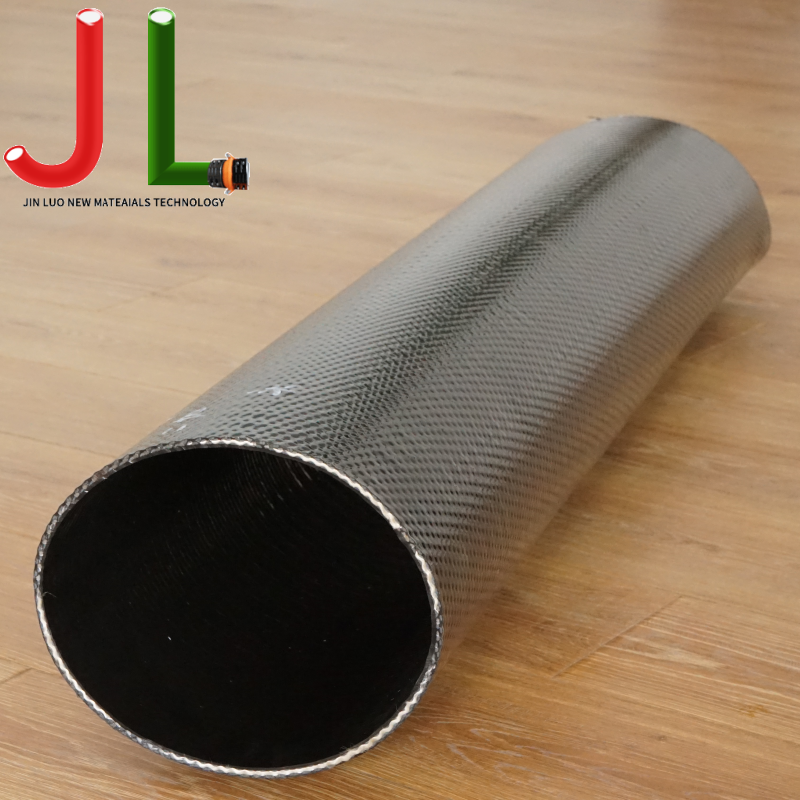
Concrete is one of the most abrasive materials conveyed through industrial hoses. Aggregate particles, particularly coarse sand and gravel, cause progressive inner-wall erosion that shortens hose service life. TPU elastomers have a Shore A hardness typically ranging from 85A to 95A and demonstrate abrasion resistance values 3 to 5 times higher than standard natural rubber in standardized DIN 53516 tests. In field applications involving standard C25–C40 concrete mixes, TPU hoses used in continuous pumping operations have demonstrated service lives of 18 to 36 months, compared to 6 to 12 months for equivalent rubber products under similar conditions.
The table below summarizes the typical technical specifications for TPU concrete pumping hose pressure rating and specifications across the available diameter range.
| Inner Diameter (inches) | Working Pressure (bar) | Burst Pressure (bar) | Wall Thickness (mm) | Weight (kg/m, approx.) |
|---|---|---|---|---|
| 2" | 28 | 84 | 2.9-3 | 0.5 - 0.63 |
| 3" | 28 | 84 | 3.2 | 1 |
| 4" | 28 | 84 | 4-4.5 | 1.76 |
| 5" | 28 | 84 | 4.4-5.4 | 2.25 |
| 6" | 30 | 90 | 5.7-6.2 | 3.3 |
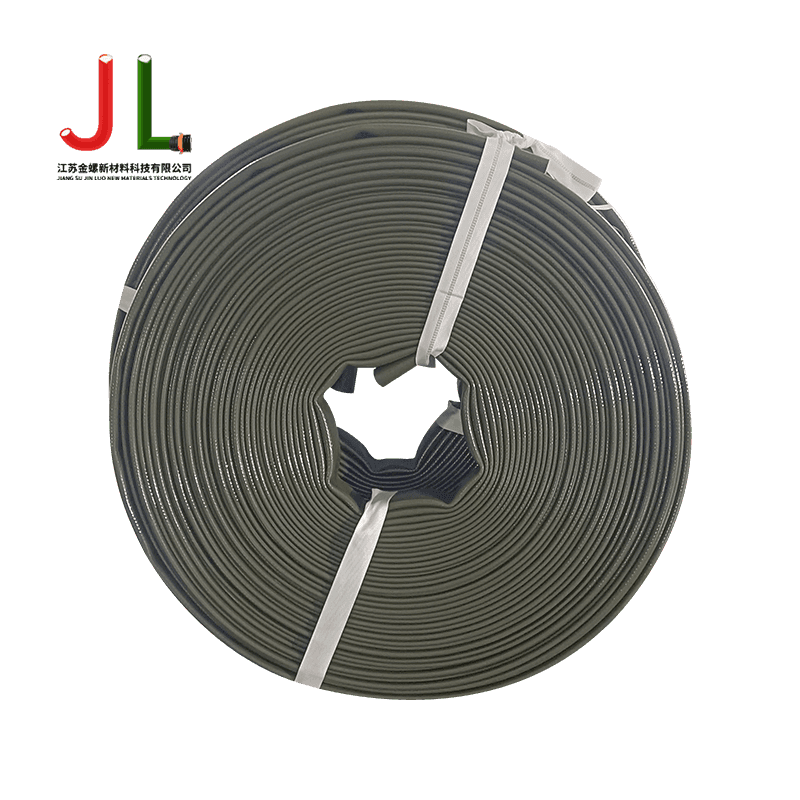
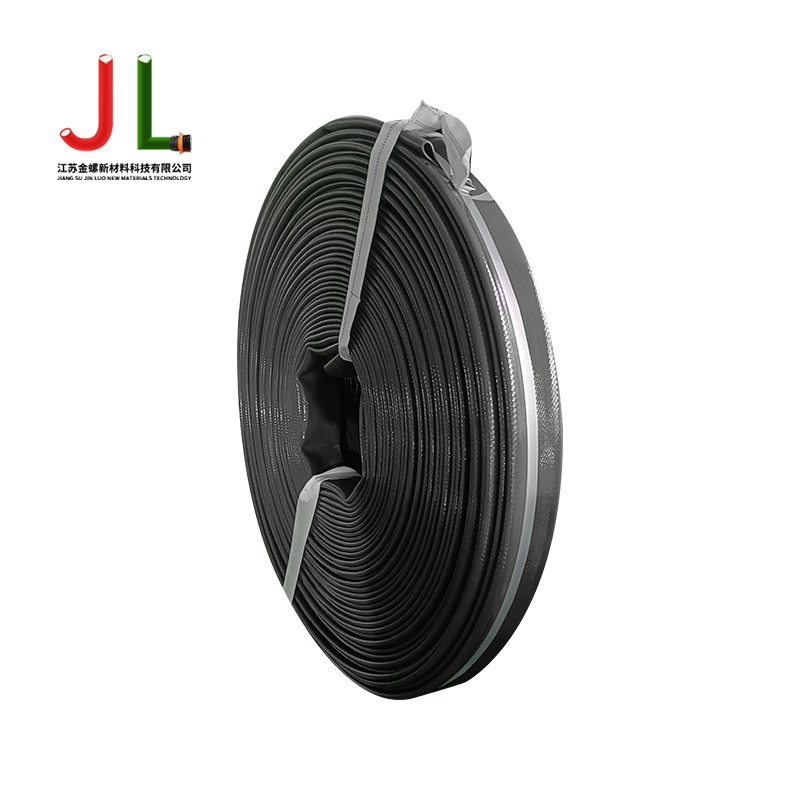
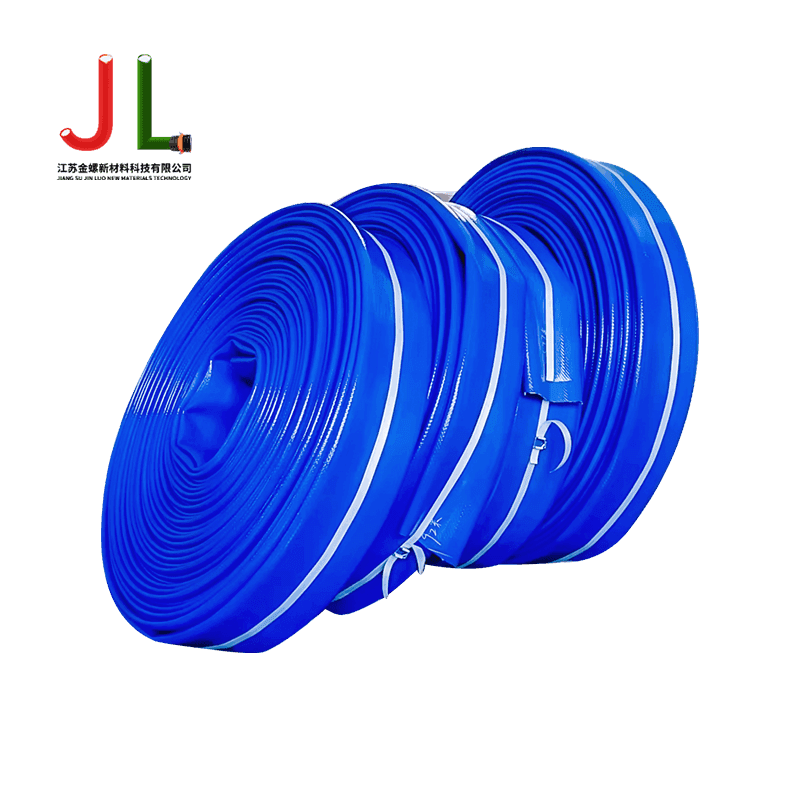
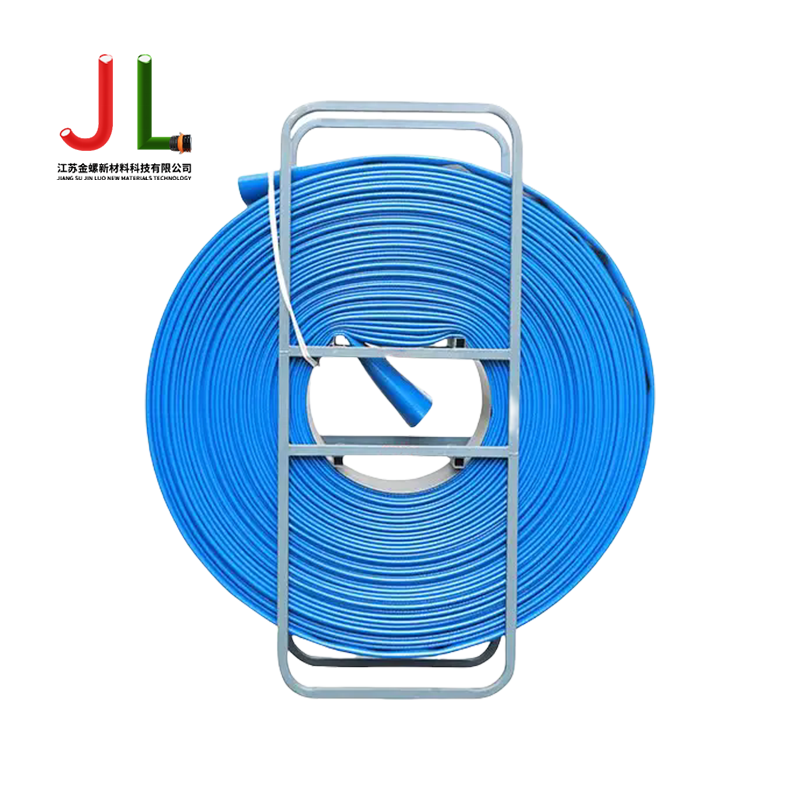
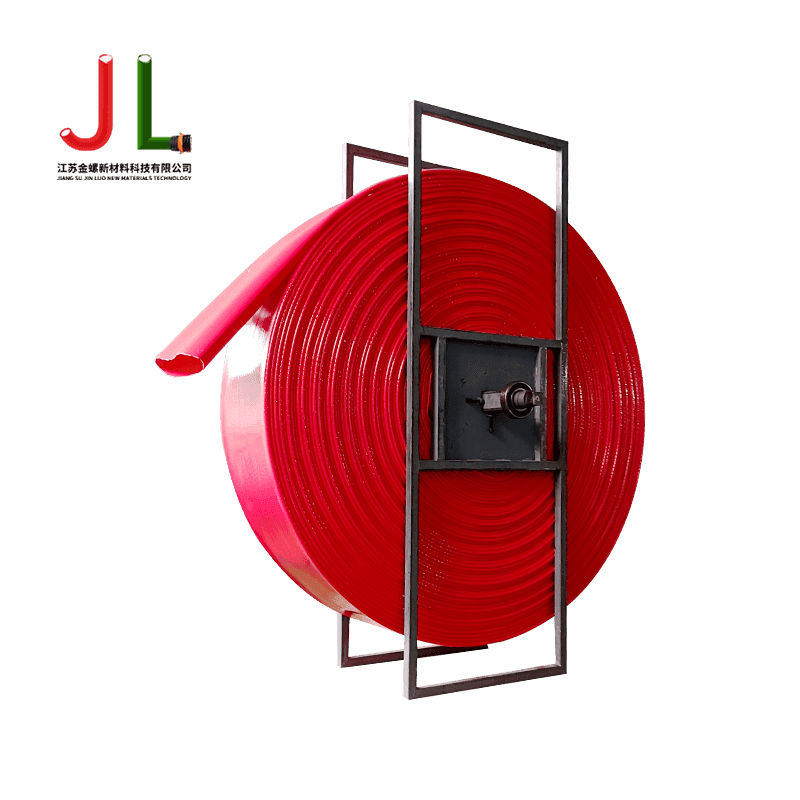
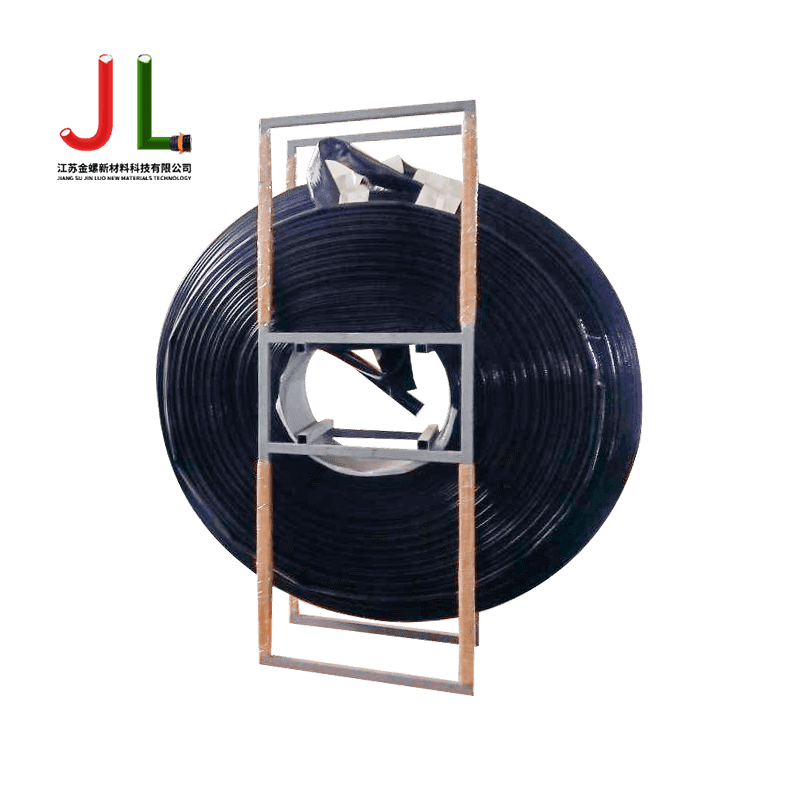
A defining feature of the lay-flat TPU hose for concrete pouring and construction is its ability to collapse flat when depressurized. This characteristic has direct practical value on construction sites:
Contractors evaluating the TPU vs rubber concrete hose comparison for contractors often focus on upfront cost, overlooking total cost of ownership. The following comparison addresses the performance parameters that directly affect operational efficiency and replacement frequency.
| Performance Parameter | TPU Concrete Hose | Standard Rubber Concrete Hose |
|---|---|---|
| Abrasion Resistance | High (DIN 53516: 20–40 mm3 loss) | Moderate (60–120 mm3 loss) |
| Weight (per meter, 3" ID) | 0.7 – 1.09 kg | 2.8 – 3.5 kg |
| Lay-Flat Capability | Yes | No (pre-formed round) |
| UV and Ozone Resistance | Excellent | Moderate (requires stabilizers) |
| Operating Temperature Range | -40°C to +70°C | -20°C to +70°C |
| Estimated Service Life | 18 – 36 months (continuous use) | 6 – 12 months (continuous use) |
| Chemical Resistance | Good (alkalis, most admixtures) | Variable by compound |
The weight differential is particularly significant for manual handling. A 20-meter run of 3-inch rubber hose weighs approximately 56–70 kg, whereas the TPU equivalent weighs 14–21.8kg — a reduction that lowers operator fatigue and reduces the risk of strain injuries during repositioning.
In high-rise construction, concrete is pumped vertically over distances that can exceed 100 meters, generating sustained line pressures in the 20–28 bar range. The reinforced structure of a quality TPU Concrete Placement Hose maintains dimensional stability under these conditions without ballooning or kinking. The lighter weight also reduces cumulative load on pump boom sections and scaffolding anchor points.
Confined-space and remote-access applications — such as tunnel lining, bridge deck pours, and underground foundation work — benefit directly from the lay-flat storage format. Hose runs can be pre-coiled, transported to the pour location in a compact form, and deployed quickly. The operating temperature range of -40°C to +70°C also makes TPU hoses suitable for cold-climate infrastructure projects where rubber compounds can stiffen or crack.
Hose selection starts with the concrete pump's rated output volume and the maximum aggregate size in the mix design. A commonly applied guideline is that the hose inner diameter should be at least three times the maximum aggregate size to prevent blockage. For pumps operating at 60–90 m3/hour, a 4-inch (100mm) inner diameter is typically appropriate. Higher-output trailer pumps exceeding 120 m3/hour generally require 5-inch or 6-inch hose runs.
The table below summarizes reinforcement choices and their application suitability for TPU concrete pumping hose pressure rating and specifications.
| Reinforcement Type | Tensile Strength | Best For | Static Dissipation |
|---|---|---|---|
| High-tenacity polyester fiber | Moderate–High | Standard construction, irrigation | Optional (conductive fiber models) |
| Aramid woven fabric | High | High-pressure and high-rise applications | Optional (conductive fiber models) |
For applications where hose sections pass through classified zones or where dry concrete powder is conveyed, specifying a model with conductive fiber reinforcement is advisable to prevent static discharge incidents.
The core differences are material properties and structural design. TPU Concrete Placement Hose uses thermoplastic polyurethane for both the inner lining and outer cover, which provides 3 to 5 times greater abrasion resistance compared to standard natural rubber compounds. TPU hoses are also significantly lighter — typically 40–50% lighter per meter — and offer a lay-flat design that simplifies storage and transport. Rubber hoses are pre-formed in a round profile and cannot be stored flat. Over a full project lifecycle, the longer service life of TPU hoses generally results in a lower total cost of ownership despite a higher initial unit price.
Working pressure depends on inner diameter and reinforcement specification. For 2-inch and 3-inch models with high-tenacity polyester or aramid reinforcement, working pressures of up to 85 bar are achievable, with burst pressures at a 3:1 safety factor (255 bar). Larger diameters operate at lower working pressures due to hoop stress geometry: a 6-inch model is typically rated at 30 bar working pressure. Always verify the specific pressure certification for the product batch and apply an appropriate safety margin based on pump surge pressure, not steady-state output pressure alone.
Flushing the hose with clean water immediately after each pour is the most important maintenance step. Concrete begins to set within 30–45 minutes in warm conditions, and any residue left in the bore will cure into a hard deposit that narrows the flow path and accelerates inner-wall stress. A foam cleaning pig or rubber ball can be driven through the hose with compressed air or water pressure to remove residual concrete slurry. After flushing, the hose should be stored flat, away from direct sunlight and petroleum-based fluids that can degrade the TPU compound over time. Regular inspection for outer cover cracking, end fitting corrosion, and bore wear should be conducted every 3 months under normal use.

Request for a call today